Training Tip: Functional Conformation
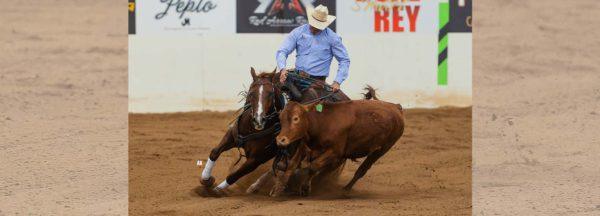
When I first came to the United States and was getting involved in the reining industry, Doug Carpenter’s name kept coming up in conversations. I wanted to know how people were finding their top-level reiners, and nearly everyone I talked to told me they worked with Doug Carpenter. It seemed that the Oklahoma horseman had a natural ability to select standout horses.
If you know me, you know I go straight to the source. So it wasn’t long before I found a way to introduce myself to Doug. I made it clear to him that I was serious about hiring him to help me find world-class horses, and I shared my intent to build up an industry-leading breeding program.
As Doug and I began working together, I was curious about how he went about selecting horses and I couldn’t resist asking questions. He shared with me that conformation is a key component, which didn’t surprise me. Like most horsemen, I’ve always known that conformation is important, but it wasn’t just good, solid conformation Doug was looking for. He was looking for functional conformation, meaning that the horse not only had good structural conformation but was built to perform the discipline he was intended for.
For example, when looking at reining prospects, you want a horse that naturally carries his head and neck level with his withers and drops his head to a 45-degree angle from his neck. Why? Because that’s the self-carriage you want the horse to have. You’re not looking for the horse that walks around like a giraffe with his neck jutting high out of his withers and his nose poked up to the sky.
Does that mean a naturally high-headed horse can’t do well in reining? Not at all. But I will guarantee it won’t be easy to get him to perform reining maneuvers. It’ll take a hell of a lot more training to get him to the same level as a horse with the right functional conformation. Not only that but the horse with the right functional conformation will be more comfortable executing the maneuvers and will be less likely to suffer performance-related injuries. Just like us, when a horse is comfortable, he performs better.
Doug, of course, told me all of this when we began working together, but the importance of his words didn’t sink in until I began paying close attention to the conformation of the horses I had in training. When you’ve got a horse that’s built to do his job, he’s so much easier to train. It’s a night and day difference.
Functional conformation applies to all disciplines we do with our horses, whether that’s dressage, working cow horse, jumping, barrel racing … you name it, and if your horse isn’t built to perform, you’ll have a tougher time getting him to the level at which you want to participate.
Understanding the importance of functional conformation played a key role in my decision to switch my focus from breeding to buying up-and-coming performance horses. When Doug and I would go select horses, we’d look at a hundred horses and make an offer on one. Whereas if you’re breeding horses, you may breed a hundred to end up with one outstanding one. I enjoyed the breeding side of the industry and had a lot of success at it, but now that I’m focused and working with a limited number of horses, it makes more sense to find the horses built and bred to do the disciplines I want to do.
Have a horsemanship question or looking for more training tips? Check out the No Worries Club.
