Training Tip: Working With a Blind Horse
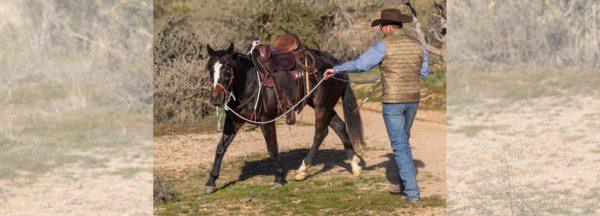
Question: I have a horse that had an eye removed. He is penned with horses that don’t ambush him on that side, so he doesn’t become as jumpy. He is good with being desensitized on that side, but he is really pushy with groundwork, even if I am talking to him so he knows where I am. He tries to push through me on his blind side. Can you talk to us about issues that arise when a horse is blind in an eye and how to resolve those issues? – Susan
Answer: This is a good question that comes up quite often. To be perfectly blunt, the No. 1 issue horses who are blind in one eye have is owners who make excuses for their behavior. I treat all horses pretty much the same, regardless of their circumstances, meaning I don’t make any special allowances because of their history. I don’t care if the horse was abused, if he’s blind in one eye, if he’s deaf or if he’s mistreated by the whole herd of horses he’s turned out with—when I take a horse in for training, I drop all the excuses and focus on teaching the horse the Method.
Horses are intelligent creatures, and you’ll find that your horse will adapt readily to your cues. Do the exercises in the Method in order and don’t skip any steps. Because your horse is blind in one eye, you may have to make a few alterations when it comes to Roundpenning and Lunging for Respect. After working with horses that are blind in one eye, I’ve found that on the side that they’re blind on, you may have to use a verbal cue in addition to your body language to help them understand the concept of the lesson initially.
For example, let’s say your horse is blind in his right eye. You’re roundpenning him and he’s going around the pen so that his right eye is the closest to you. When you step out in front of his drive line and then back up to get him to change directions, he’s not going to see you very well. Along with my body language, when I stepped out in front of him, I may say, “Turn.” It may take him a little bit longer to catch on to the concept of the lesson, but he’ll eventually get it.
When you progress to riding the horse, especially if you ride him on the trail, you’ll need to be aware of potential objects that may spook him. If you see something that may spook your horse, such as a bicycle rider coming down the trail, position your horse so that his good eye is able to see them coming. You have to be a little bit more proactive.
As far as day-to-day handling goes, I’m aware of how I approach the horse, especially if he’s tied up. When I come up to him on his blind side, I make sure to make some noise so he can sense me coming and I don’t take him by surprise. I often say the horse’s name and slap my hand on my leg to get his attention. That way, he can acknowledge you and know that you’re there. You don’t want to sneak up to the horse, raise your hand to rub him, and startle him and cause a wreck.
You’ll be amazed about how quickly horses adapt with just one eye. Over the years, we’ve had many people use the Method with great success on horses who are completely blind.
Looking for more training tips? Check out the No Worries Club. Have a training question? Send it to us at [email protected].
