Training Tip: Brave Cowards
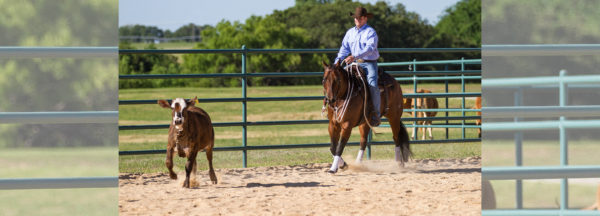
Whenever a horse is scared of something, the last thing you want to do is act like a predator and force him to face the scary object directly. Horses are always more confident when they’re following or chasing something as opposed to having something chase them. Horses and dogs are what I like to call brave cowards. For instance, let’s say you are on your horse, and a dog comes out and chases you. As long as you are riding away from the dog, he will continue to come after you. He is the bravest dog in the world. He barks and runs along behind or beside you. He might even be nipping at your horse’s heels. As far as he is concerned, he’s got that big horse under control!
If you turn your horse around and face the dog, chances are the dog will back off a little bit. He might keep barking at you, but in many cases, he will stick his tail between his legs and back off.
Now, if you take that one step further and actually ride toward the dog, or chase him, then he will really start to run away from you. But if you stop riding toward the dog and ride away from him, like a yo-yo, he will stop running from you and start to run toward you again. The dog is a brave coward. He is only brave as long as you are going away from him. When you are going toward him, the coward in him comes out, and he runs away.
Horses react in much the same way. They don’t like things coming toward them. As long as a strange animal is approaching, the horse will try to avoid it and run away. But if the horse has the opportunity to be the one going toward the animal, and if the animal is the one retreating, then the horse gets braver.
One of the best ways to get your horse used to other animals (or any spooky object for that matter) is to put the animals in a controlled environment and then follow them around. If, for example, your horse is scared of cows, just put one cow in the arena initially, not the whole herd. Once he is comfortable with following one cow, add another cow, and so on.
When you first begin to follow the animals around, your horse will likely hang back and be cautious, or in some cases downright frightened to death! That’s normal. The more he chases the animals away, the more his confidence will grow and the closer he will get to them. Keep in mind though that you’re really not chasing the animals; you just want to follow them. You don’t want to exhaust the animals, run them into the ground or trample them underfoot. You don’t really even want your horse to get so close to the animals that he can touch them. You just want to show the horse that the animals pose no threat to him and that he can relax.
