Training Tip: An Important Lesson All Horse Trainers Should Experience
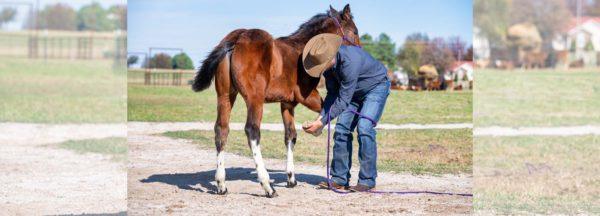
Your farrier is vital to your horse’s overall health and wellbeing and plays a key role in your horse’s ability to perform. A skilled farrier is worth his weight in gold, but in a lot of cases, farriers are some of the most underappreciated and underpaid professionals in the horse industry. They are often put in dangerous situations by owners who do not care enough to take the time to properly prepare their horses to have their feet handled.
One of the best lessons I learned as a young horseman while doing my apprenticeship with Gordon McKinlay was how to shoe a horse. When Gordon told me that he wanted me to learn how to trim and shoe horses, I made sure he knew that I had no intention of being a horseshoer, I wanted to be a horse trainer.
Gordon just smiled and said that if I wanted to be any sort of respectable horse trainer, I needed to learn how to teach a horse to be confident about having his feet handled and to stand quietly for the farrier. “The only way you’ll truly appreciate the importance of teaching a horse to have his feet handled is to experience what a farrier does,” Gordon said.
He was dead set right. When you’re not the one getting pushed around, kicked at, leaned on or dragged around the barn by a horse, you don’t care very much at all how a horse behaves for the farrier. But when you’re the one underneath the horse trying to get a job done, you care.
Teaching a horse how to stand well for the farrier is a lesson I’ve taught all of my students, as well. Plain and simple, it’s just good horsemanship.
Looking for more training tips? Check out the No Worries Club. Have a training question? Send it to us at [email protected].
