Saddle Cleaning
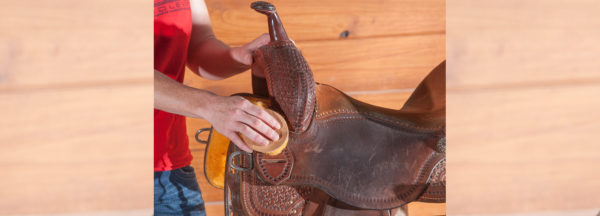
Are you in love with your saddle? Does that new beautiful saddle make you soar with pride? Unfortunately, nothing stays new forever, especially something used as often as your favorite saddle that you throw on your horse every day. Proper maintenance will exponentially extend a saddle’s lifespan. At Martin Saddlery, we understand that your saddle is an investment, and one you plan to use for many years. So here are some important tips to help keep your investment in great cosmetic and working condition.
The three main elements, which can cause the most wear and premature aging, are: dust, the salt element in horse sweat, and heat. Each element on its own can prove to be taxing on leather. However, it is the combination of the three that will cause the most damage the quickest and will physically begin to breakdown the leather. Heat from the sun plus the salty nature of horse sweat causes moisture in the leather to evaporate, making it brittle and weak. Regular dusting and storing your saddle out of direct sunlight will help maintain the leather’s moisture. As a good practice, you should always wipe your saddle down after a good workout to remove excess sweat.
Dusting should be your primary focus for routine saddle care. You can use a soft bristle brush or an air compressor to remove dust and dirt from within the tooling patterns and hard-to-reach places. An air compressor works fantastic in removing grit from rough-out and suede, without damaging the texture.
Dirt can bury deep into the tooling, which causes premature aging and a faded look.
Important Rule:
If you can’t put the product on human skin, don’t put it on your saddle!
We recommend olive oil or a light cream conditioner to add moisture back to your saddle. You should always dust your saddle immediately before applying any products, such as saddle soap or oil. If the product is very greasy, be cautious, apply sparingly, and always wipe off any excess. Soaking a saddle in oil can be worse than not oiling it at all. Remember, moderation is key when conditioning your saddle.
Also, be sure the hidden parts of your saddle, such as the underside of the swells and fenders, are getting attention as well. Do not oil suede seats. Only if a saddle’s rough-out is extremely dry, should you apply a very minimal, light coat on the texture itself. Any rough-out on your saddle should be oiled very sparingly, depending on its condition. If you are unsure, consult a professional.
Martin offers Oil Pad Woolskins or “Leather Care Pads” packages of four for $10.99. They’re available at any Martin or Classic Equine retailer.
A regularly used saddle will need to be oiled more often than a saddle not in regular use. However, dusting your saddle should be a priority no matter how often it is used or where it is stored.
With just a little TLC, your investment will look great and hold up for many years.
Wipe.
Dust.
Lightly oil on occasion.
Ride often.
