From Colt Starting to Well-Broke Horse
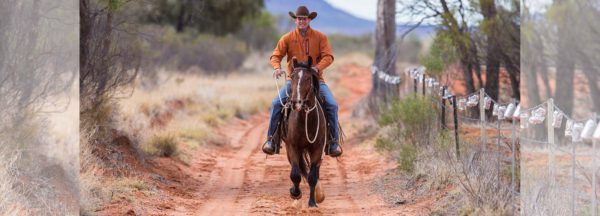
Clinton explains why a well-broke horse needs to receive equal doses of long rides, wet saddle pads and concentrated training:
Long rides…
You can’t expect a colt to get broke by riding him for 20 minutes a day. You have to put some miles under his feet. The best place to ride a colt is on a dirt road that goes for miles. Horses can go sour quickly if you only ride them in a small space like a roundpen or an arena. The smaller the area, the more it shuts them down mentally and physically.
Wet saddle pads…
Most horses are overfed and underworked. Don’t get on your colt and just walk for an hour – get his feet moving and give him a job to do.
Concentrated training…
Constantly ask the colt to bend and soften his body from his nose to his tail, which is all part of concentrated training.
Equal doses…
A truly broke horse receives an equal dose of all three ingredients. It’s no good to have only one or two. Racehorses get lots of wet saddle pads, but no long rides or concentrated training. I’ve seen trail horses go for long rides but come back without a drop of sweat on them because they walked the entire time. And I’ve seen plenty of show horses receive wet saddle pads and concentrated training, but they’ve never stepped foot outside the arena for long rides. If you give your colt equal doses of all three ingredients, you’ll have a responsive and respectful horse that you can do just about anything with.
In his Colt Starting Series, Clinton details the method he uses to get horses off to the right start. Learn more about the Colt Starting Series on our website.
